These two land within 10 mm of each other on every outside dimension and both pour milk from a carafe rather than a wand, so the usual comparison points barely separate them. What separates them is how much each maker will put in writing about living with the machine.
The “under £500” framing only half holds. The De’Longhi Magnifica Evo ECAM290.61.SB was listed between £349.00 and £443.99 on 21 September 2026. The Philips Series 3300 EP3347/90 LatteGo ran from £422.95 to £569.99 the same day, including £569.99 on Philips’ own UK listing. Cheapest against cheapest the Philips costs £73.95 more, dearest against dearest £126.00 more, and against De’Longhi’s dearest listing it comes out £21.04 less. Where you buy moves this more than the machines do.
Where they differ
| Philips Series 3300 EP3347/90 | De’Longhi Magnifica Evo ECAM290.61.SB | |
|---|---|---|
| Width x depth x height | 247 x 434 x 366 mm | 240 x 440 x 360 mm |
| Weight | 8 kg | 9.6 kg |
| Water tank access | Front | Removable tank |
| Bean hopper | 275 g | 250 g |
| Grounds container | 12 servings | Not published as a servings figure |
| Grind settings | 12 | Not published as a count |
| Burr material | Ceramic | Not published |
| Cup clearance | Adjustable spout, 85 to 145 mm | Maximum cup height 140 mm |
| Milk carafe | LatteGo, 250 ml | LatteCrema carafe, capacity not published |
| Rated power | 1500 W brewing | 1450 W |
| Stand-by after | 15, 30, 60 or 180 minutes, selectable | 30 minutes |
| Water filter | AquaClean, at least every 3 months | DLSC002, about every 2 months |
| Descaling | Up to 5,000 cups claimed, see below | No interval published |
| Warranty in the UK | 2 years | Not published as a number of years |
| UK price range, 21 September 2026 | £422.95 to £569.99 | £349.00 to £443.99 |
What they share is short: a 1.8 L water tank, a 15 bar pump, a removable brew group and a carafe instead of a steam wand. Neither maker publishes a heating system, a warm-up time or a noise figure.
Size, filling and the grinder
Philips is 7 mm wider, De’Longhi 6 mm deeper, Philips 6 mm taller. On a worktop these are the same machine, and neither maker gives the height with the bean hopper lid open, so measure your own gap and allow for the lid.
Cup clearance is the one size figure that parts them, and the makers express it differently. De’Longhi gives a maximum cup height of 140 mm. Philips’ product leaflet gives an “Adjustable spout height: 85-145 mm”, which is how far the spout travels rather than a cup limit.
Filling matters more than the 1.6 kg weight gap. The Philips tank is reached from the front. De’Longhi’s manual has you “remove the water tank (A9)” and carry it to the tap, the harder move under a wall unit.
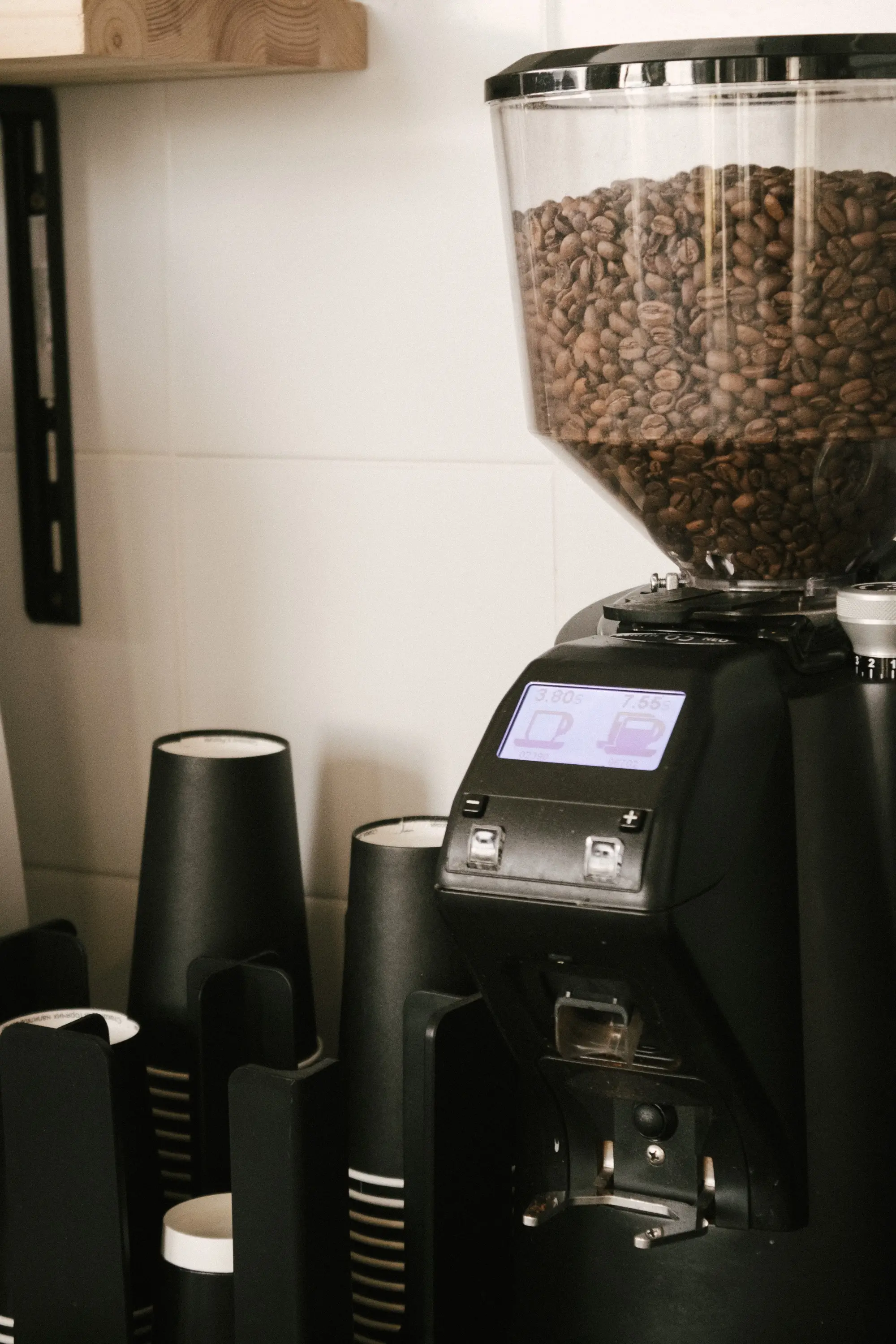
Philips also publishes what De’Longhi does not: 275 g of beans against 250 g, a grounds container rated at 12 servings, “100% ceramic grinders” and 12 grind settings. The Magnifica Evo has an adjustment dial that the manual says “must be turned only when the coffee grinder is in operation”, but no published burr material, settings count or servings figure, so there is nothing to set the Philips numbers against.
Two carafes, two cleaning routines
Philips’ claim for LatteGo is its own: the leaflet says it “is the fastest milk system to clean with only 2 parts, no tubes and can be cleaned in 10 seconds under the tap or in the dishwasher”, with an asterisk pointing at consumer testing in Germany in 2023. The dishwasher list runs to two items, “Dishwasher-safe parts: drip tray, LatteGo”.
De’Longhi’s UK product page lists “a one-touch automatic cleaning function and dishwasher safe milk carafe”, but the Magnifica Evo manual sets out the work. There is a routine for “Cleaning the milk carafe after each use”, a periodic “Thorough cleaning of milk carafe”, and a dishwasher load of “the lid in the top basket of the dishwasher in upright position and the small parts (froth dial, milk delivery spout, intake tube and connector) in the cutlery basket”, on a 50 °C standard eco programme. Five pieces and a named cycle against a claim of two parts and no tubes.
The same manual dates the brew unit: clean the removable brewing unit “at least once a month” with the machine off and the tank out. Your own manual wins if it differs.
The descaling claim, and what it rests on
Philips markets this machine on not descaling: “Up to 5000 cups** without descaling thanks to Aquaclean”. That is the maker’s claim, and its footnote gives the conditions. The figure is “based on 8 filter replacements as indicated by the machine”, and the Philips 2300 and 3300 series manual says to “replace the AquaClean water filter at least every 3 months, even if the machine does not yet indicate that”. Eight filters at three months each is two years of filter buying to reach 5,000 cups, close to seven cups a day throughout. Skip a filter and the claim stops describing your machine.
De’Longhi publishes no descaling interval at all. The warning adapts to the water hardness entered at setup, and the manual calls for De’Longhi descaler when it lights. The De’Longhi support listing for this model gives DLSC002 as the filter, replaced “after two months (see date indicator), or after 3 weeks if the appliance has not been used”. Over a year that is six De’Longhi filters against four Philips ones, before any descaler.
Cover splits the same way. Philips states a “2 year guarantee” and names its six drinks, hot water included: “Beverages: espresso, coffee, cappuccino, latte macchiato, iced coffee, hot water”. De’Longhi offers a “smart control panel with colour touch icons, including 5 one-touch drinks” and a warranty given only as a full manufacturer warranty, with no term attached.
Which one
Choose the Philips Series 3300 EP3347/90 for the published commitments: two years of cover, 12 grind settings, a ceramic burr, a 12-serving grounds container, a two-part carafe and a descaling claim you can check against its own footnote. Front filling and 8 kg also make it the easier machine to keep under a cupboard.
Choose the De’Longhi Magnifica Evo ECAM290.61.SB if price leads. It was cheaper at every UK retailer we looked at on 21 September 2026, holds the same 1.8 L and runs the same 15 bar pump, and 140 mm of cup clearance suits most mugs. You are taking on a carafe of five washable parts, filters every two months rather than three, and no published number for the warranty, the burrs, the grind settings or the grounds container.