Cleaning takes coffee oil and milk out of the parts that touch the drink. Descaling takes limescale out of the water circuit, and that is a separate job with its own product. The cleaning routine changes a lot with the kind of machine you own, so the maker’s manual for your model is the thing to follow, and it wins over anything here if the two differ.
What the machine type decides
| Type | Machines here | The part that sets the routine |
|---|---|---|
| Manual espresso | Gaggia Classic E24, De’Longhi Dedica Style | Filter baskets and the screen, washed by hand |
| Espresso with a built-in grinder | Ninja Luxe Café | A backflush cycle with a disc and a tablet, plus the burrs |
| Bean to cup | De’Longhi Magnifica Evo, De’Longhi Rivelia, Philips Series 3300 LatteGo | A brew group that comes out, plus a milk carafe |
Two of the three makers put a ban in writing. De’Longhi rules out solvents, abrasive detergents and alcohol on all three of its machines here, and Gaggia’s manual for the Classic E24 says not to use abrasive cleaning tools on the drip tray and grill. Philips publishes no such list, but every instruction it gives for a removable part is the tap, washing up liquid or the dishwasher.
Manual espresso machines
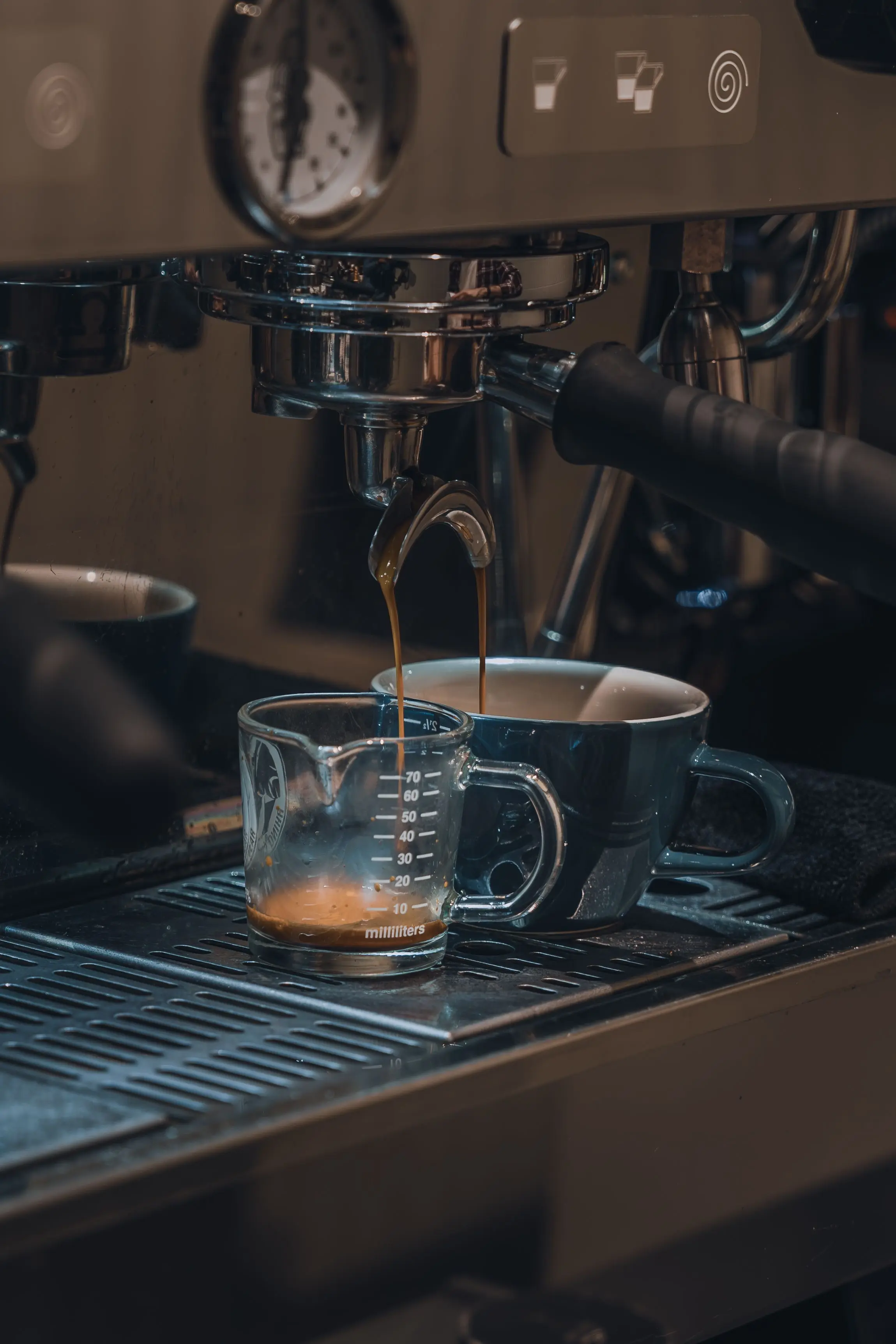
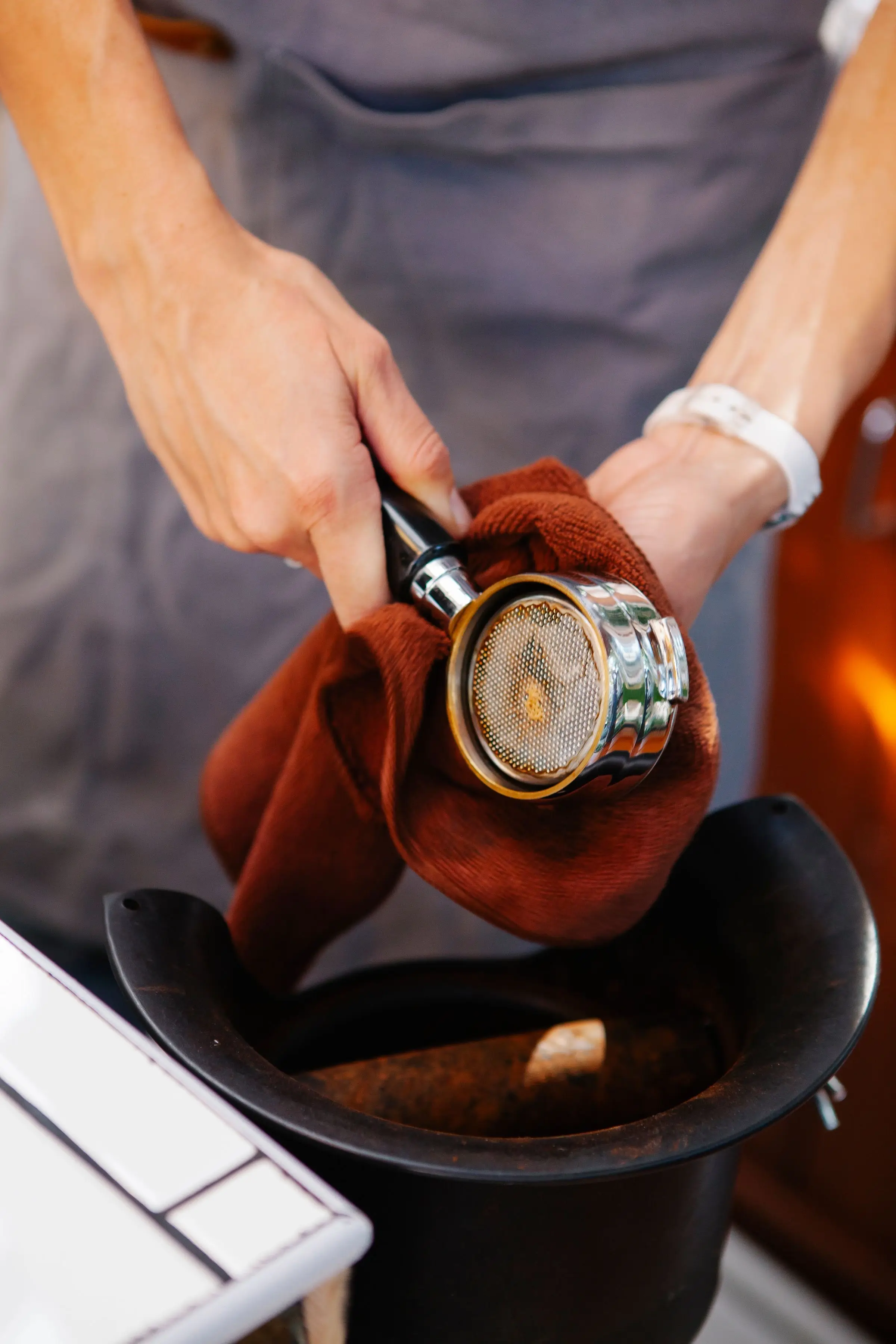
There is no automatic cycle on these, so everything happens at the sink. Gaggia’s instruction for the Classic E24 is to take the filter out of the filter holder every day and wash it in warm water. If coffee stops flowing properly, it says to immerse the filters in boiling water for 10 minutes and rinse them, and it recommends its own GAGGIA cleaning tablets for a more thorough filter clean. The screen above the group gets any residual grounds brushed off regularly.
De’Longhi’s manual for the Dedica Style asks for a rinse of the filter after every use, and a deeper clean of the filters at least once a month, pulling out the perforated insert and clearing the holes with a pin. It adds two intervals the other manuals here do not give. After every 200 coffees, run about 0.5 litres of water through the spouts with no coffee in the filter. Clean the water tank about once a month. None of the Dedica’s parts or accessories is dishwasher safe.
If either machine has been standing, treat it as a restart rather than a resume. Gaggia points you back to the first-use procedure after more than two weeks unused.
Espresso machines with a built-in grinder
These have a cleaning cycle, and the machine asks for it. On the Ninja Luxe Café Premier the CLEAN light comes on by itself, and the cycle takes about six minutes. You put the double basket in the portafilter, sit the cleaning disc on top with the handle facing up, place one cleaning tablet in the centre of the disc, lock the portafilter into the group head and press CLEAN. The machine backflushes the shower screen and group head into the drip tray.
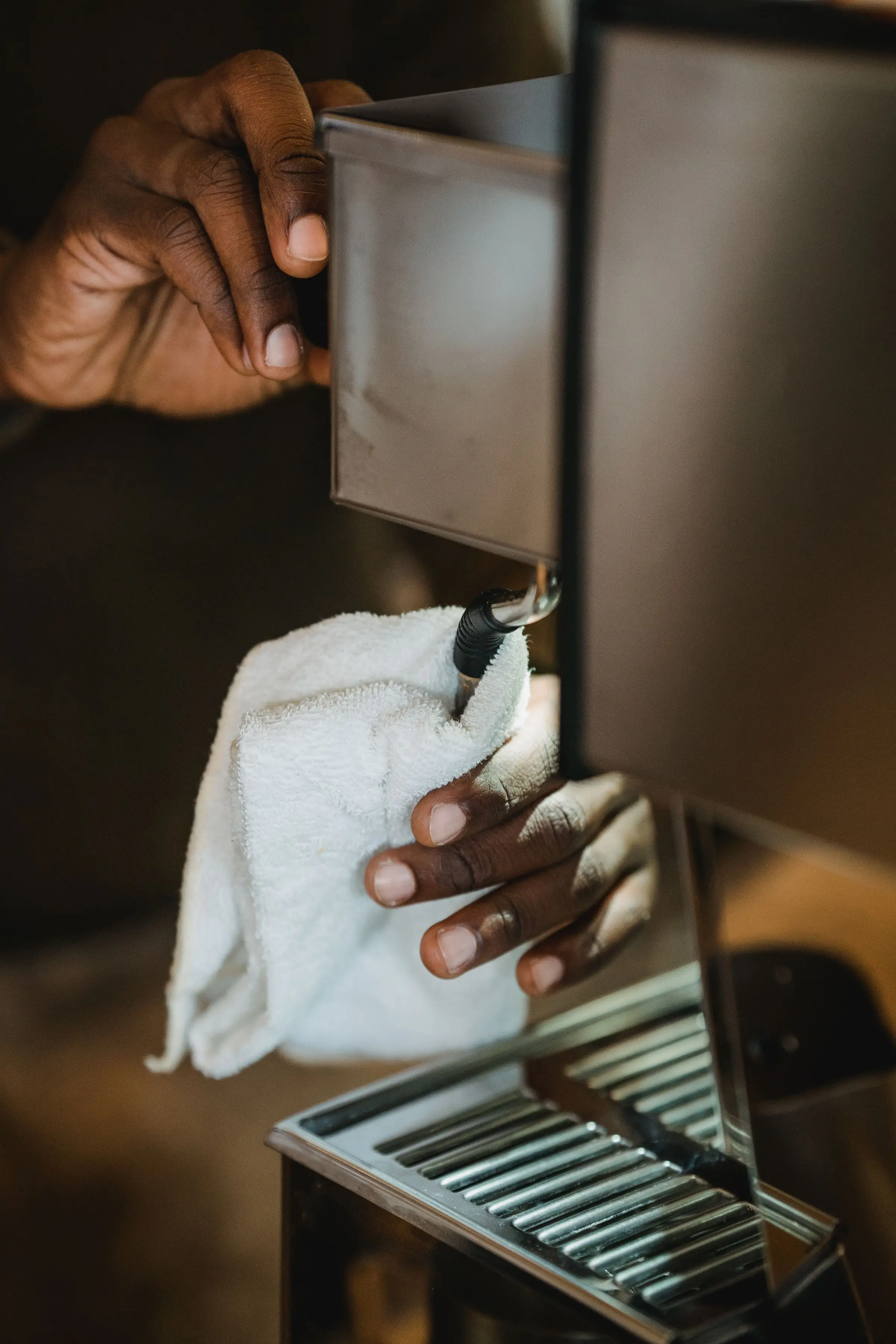
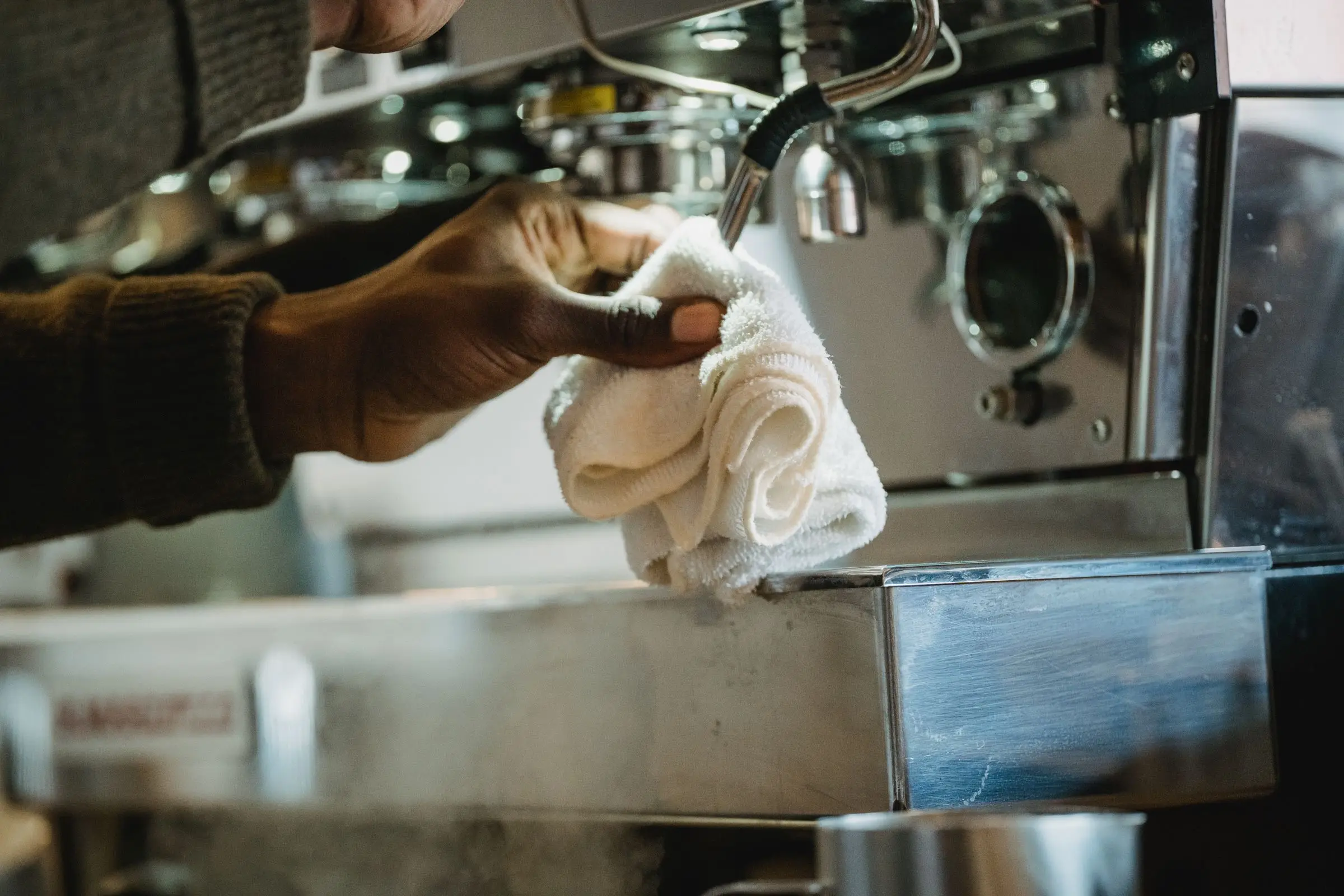
The rest of the Ninja routine is hand work. The portafilter and basket get washed between brews so the oils do not set. The steam wand is wiped with a damp cloth straight after frothing and pushed back down, which starts an auto purge. The shower screen comes off with a Phillips-head screwdriver if brew quality drops. The burr grinder is brushed out, and the burrs must never touch water. Funnel, whisk, cleaning disc, water reservoir, bean hopper and every drip tray component go in the dishwasher.
The Sage machines in this class work the same way, with a disc and a tablet. Their cycle is covered separately, below.
Bean to cup machines
The defining job here is the brew group. On the Magnifica Evo and the Rivelia it slides out, and De’Longhi’s Magnifica Evo manual says at least once a month, rinsed under running water with no detergent and never in the dishwasher. The Rivelia manual sets the same monthly minimum and adds its own list at about the same interval: the water tank, and again whenever the softener filter is changed; the pre-ground coffee funnel; the inside of the machine behind the drip tray. Clean the bean hopper periodically. De’Longhi is blunt about products: no chemical products are required for cleaning its superautomatic machines.
Philips runs on a different schedule and does use a tablet. In the Philips 2300 and 3300 series manual the brew group is rinsed under the tap weekly and cleaned monthly with a Philips coffee oil remover tablet, which goes in the pre-ground coffee compartment and is left to act for at least 15 minutes mid-cycle. Only Philips tablets, it says. The brew group is also greased every two months with Philips grease. The water tank is rinsed weekly, the grounds container cleaned weekly, and the drip tray emptied daily or as soon as the red float pops up through it.
Milk systems
Milk is the part that goes wrong fastest, and every maker here treats it as an after-every-use job. LatteGo comes off the machine and goes under the tap or in the dishwasher. Philips says to clean the classic milk frother each time for hygiene reasons and to stop residue building up. De’Longhi asks for the LatteCrema carafe to be stripped and cleaned thoroughly on a regular basis, by hand at 40 °C or on a 50 °C dishwasher cycle. Ninja’s line is the shortest: wipe the steam wand with a clean damp cloth immediately after use.
Sage machines
Sage’s cleaning cycle and its own tablets are a longer story, and they are set out in our guide to cleaning a Sage coffee machine, with limescale in the Sage descaling guide.
Where the manuals stop
De’Longhi names no cleaning tablet for the Dedica Style, the Magnifica Evo or the Rivelia. The Dedica manual has a heading for optional cleaning accessories recommended by the manufacturer and then points at the De’Longhi website instead of naming a product, which is as far as it goes.
No manual here gives a cup count for the milk system, and only Gaggia and De’Longhi put a number on the deep clean of the filters or the brew group. Everything else is an indicator light or a weekly habit.