A bean to cup machine hides the grind, the dose and the tamp inside a sealed brew unit and gives you one button. An espresso machine hands all three to you. Everything else follows from that.
The six machines compared
| Machine | Width x depth | Water tank | Beans | Grind settings | Milk | UK price |
|---|---|---|---|---|---|---|
| De’Longhi Magnifica Evo | 240 x 440 mm | 1.8 L | 250 g hopper | dial, no count published | carafe | £349 to £443.99 |
| De’Longhi Rivelia | 245 x 430 mm | 1.4 L | 250 g hopper | no count published | carafe | £592 to £749.99 |
| Philips Series 3300 LatteGo | 247 x 434 mm | 1.8 L | 275 g hopper | 12 | carafe | £422.95 to £569.99 |
| Sage the Barista Express | 318 x 351 mm | 2 L | 250 g hopper | 16 | manual wand | £499.95 |
| Sage the Barista Pro | 408 x 350 mm | 2 L | 250 g hopper | 30 | manual wand | £599.95 |
| Sage the Bambino Plus | 194 x 362 mm | 1.9 L | none | none | automatic wand | £349.95 to £399.95 |
Counter space goes the other way from what people expect
Bean to cup machines are the narrow ones. All three here sit between 240 and 247 mm across. The espresso machines with a grinder on board are 318 mm for the Barista Express and 408 mm for the Barista Pro.
Depth reverses it. The bean to cup machines are 430 to 440 mm deep, against 350 mm for the Barista Pro. If your worktop is 600 mm and a socket sits behind the machine, that 90 mm matters more than the width does.
What you do per cup
On the Magnifica Evo you place a cup under the spouts and select the drink. That is the whole sequence.
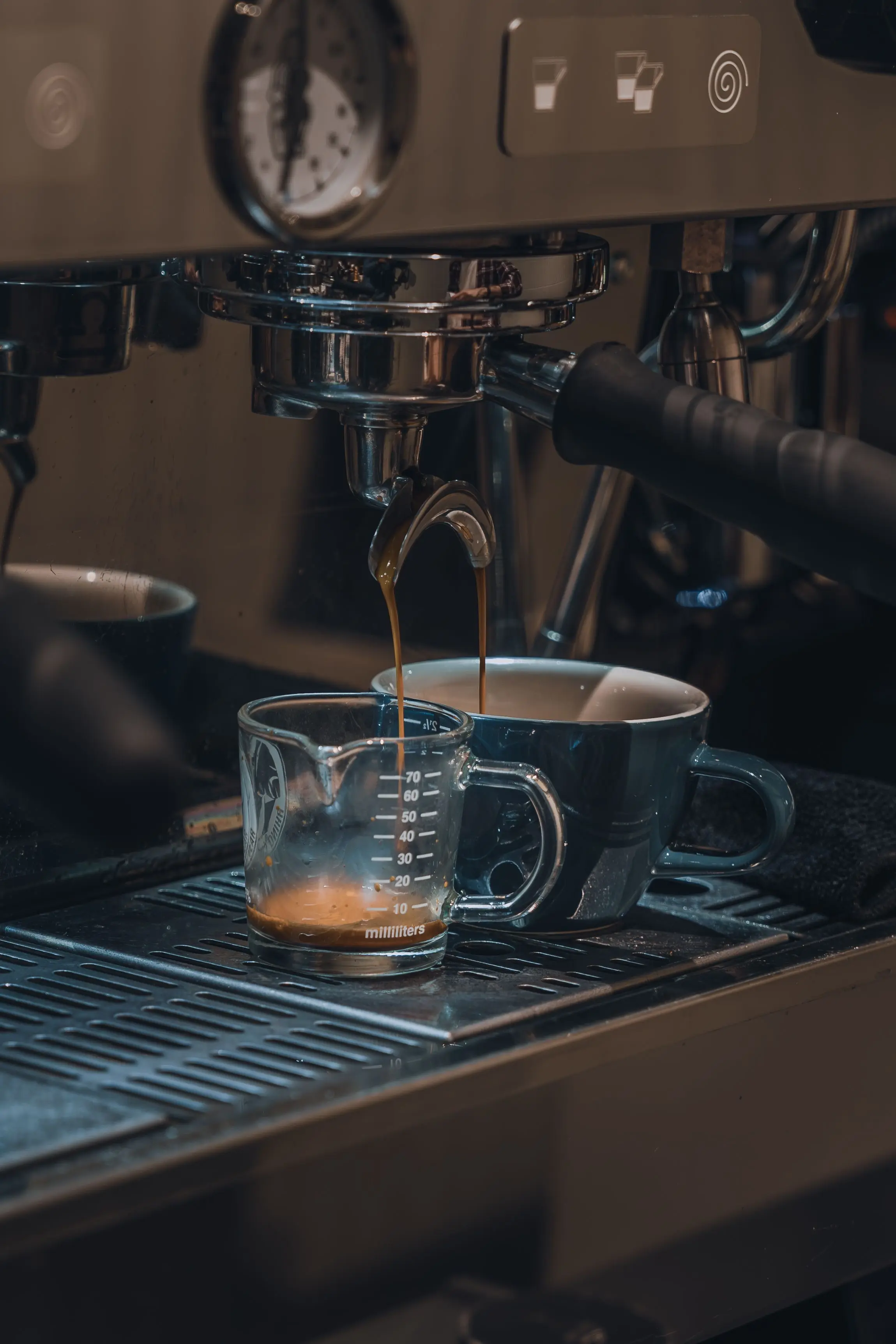
On the Barista Pro you choose a basket, grind into it, tamp, wipe the rim, purge the group head, lock the portafilter in and press a button, then knock the puck out afterwards. Call it two minutes against fifteen seconds.
Control over the shot
This is what you buy the extra minutes for. Sage’s Barista Pro manual gives the numbers you are working to: “1 CUP basket = approx. 8–11g” and “2 CUP basket = approx. 16–19g”. You set the dose, you set the tamp, and you pick between two kinds of basket. The single wall baskets, in Sage’s words, “should be used when grinding fresh whole coffee beans” and “allow you to experiment with grind, dose and tamp to create a more balanced espresso”.
A bean to cup machine sets all of that itself. What it gives you instead is a grind dial and a strength setting. Philips publishes 12 grinder settings on the Series 3300. De’Longhi’s Magnifica Evo has an adjustment dial marked 1 to 7 but publishes no settings count, and its manual warns that the dial must only be turned while the grinder is running.
Milk
The espresso machines use a steam wand and a jug. On the Barista Express and Barista Pro you work the wand yourself. The Bambino Plus and the Barista Touch do it automatically, the Touch between 40 °C and 75 °C with eight texture levels.
All three bean to cup machines use a milk carafe instead. You fill it, the machine pours, and the carafe goes in the fridge or in the dishwasher afterwards. It is faster and it takes latte art off the table.
Cleaning, which is the real difference
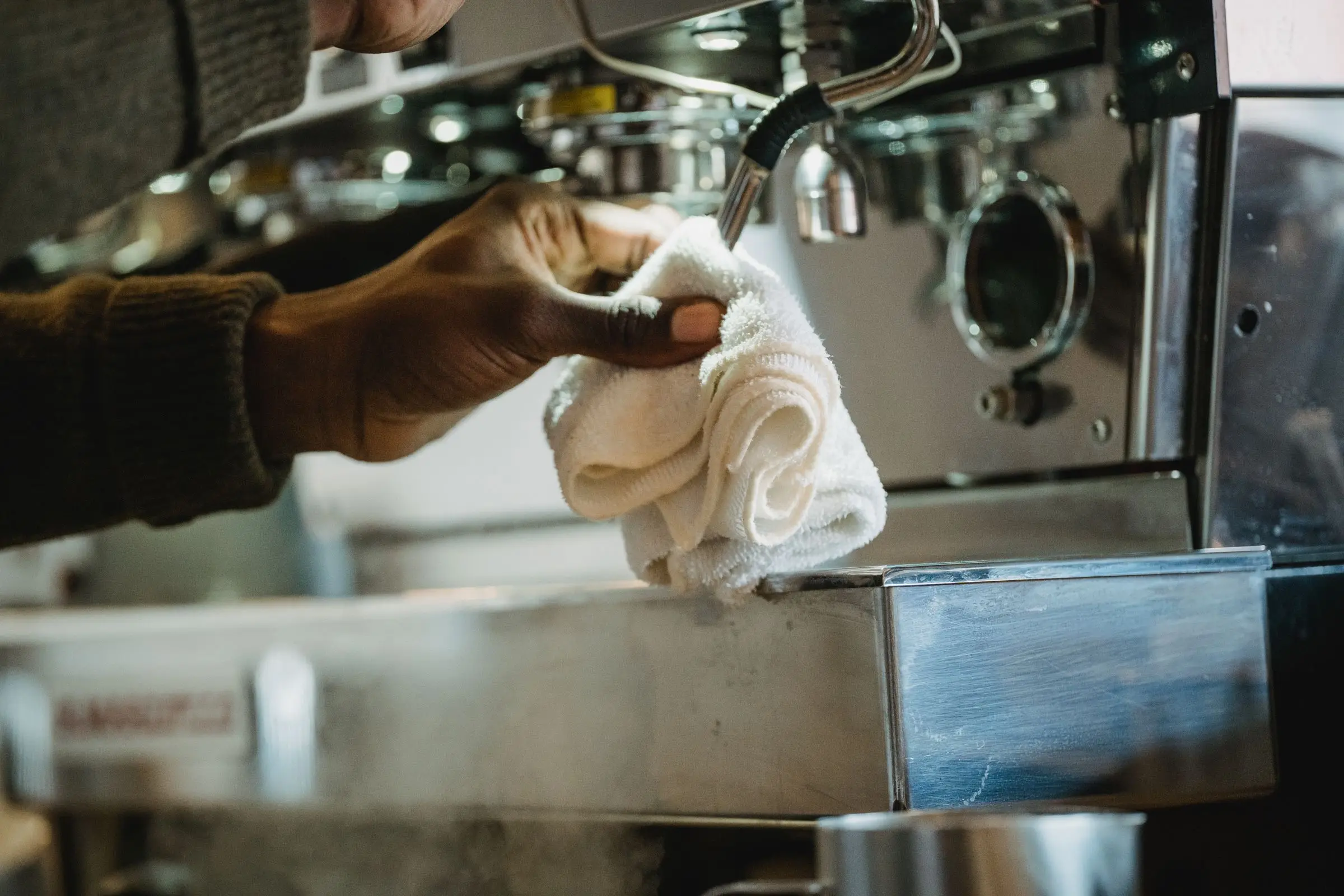
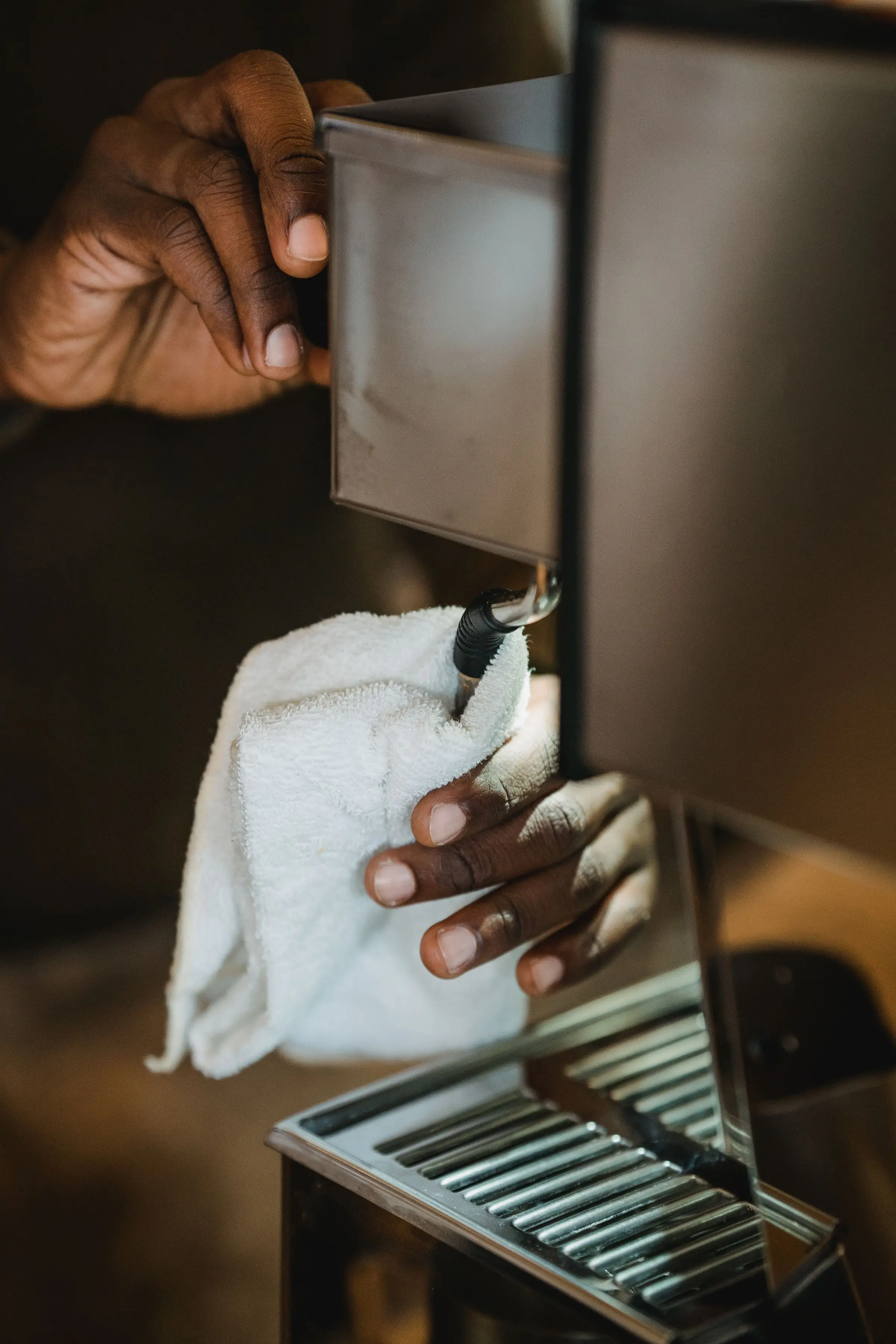
An espresso machine’s cleaning is on the outside. Wipe and purge the steam wand after every milk drink, wipe the shower screen, run a flush cycle with a cleaning tablet, descale on schedule. Sage’s Barista Express manual asks for descaling every 90 days at water hardness level 4, and every 60 days at level 6.
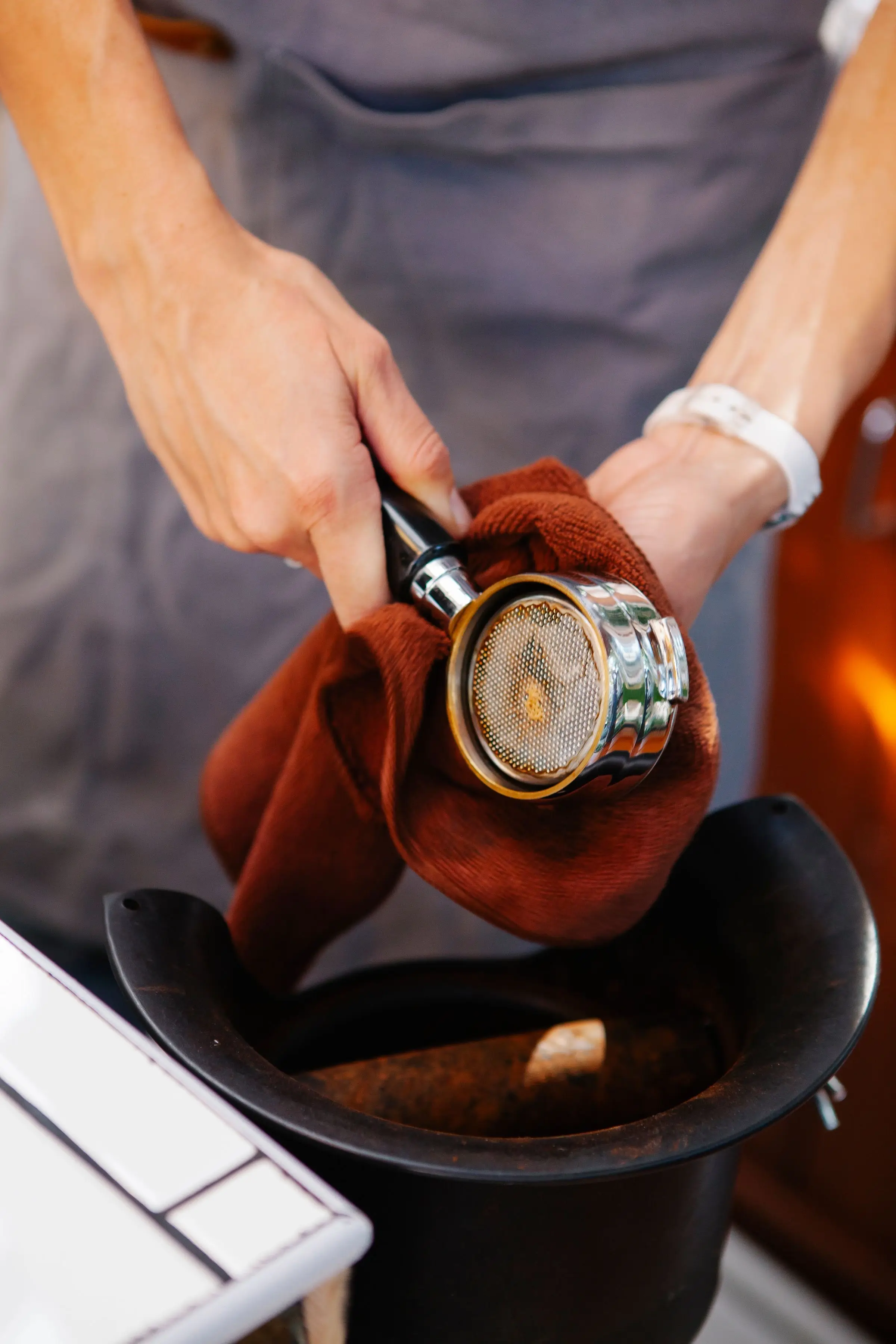
A bean to cup machine’s cleaning is on the inside, and it is on a calendar. De’Longhi’s Magnifica Evo manual says to clean the removable brewing unit at least once a month, rinsed under running water with no detergent, and the unit cannot come out while the machine is on. Philips’s manual for the Series 2300 and 3300 is stricter: the brew group comes out weekly for a rinse under the tap, gets a coffee oil remover tablet monthly, and needs lubricating every two months. The LatteGo milk container is taken apart after every use.
Against that, Philips claims up to 5000 cups without descaling if you keep an AquaClean filter in the tank, replaced at least every three months. De’Longhi’s filter for the Magnifica Evo and Rivelia, the DLSC002, lasts about two months, or three weeks if the machine sits unused with the filter fitted.
Which to buy
Buy bean to cup if the person making the coffee changes, if several drinks get made in a rush, or if nobody in the house wants to own a grind setting. The monthly brew unit clean is part of the deal.
Buy an espresso machine if you want to change how the coffee tastes and have room for a 318 to 408 mm machine. Start with the Barista Express at £499.95 for a built-in grinder, or the Bambino Plus at £349.95 plus a separate grinder if your counter is 200 mm wide and no more.