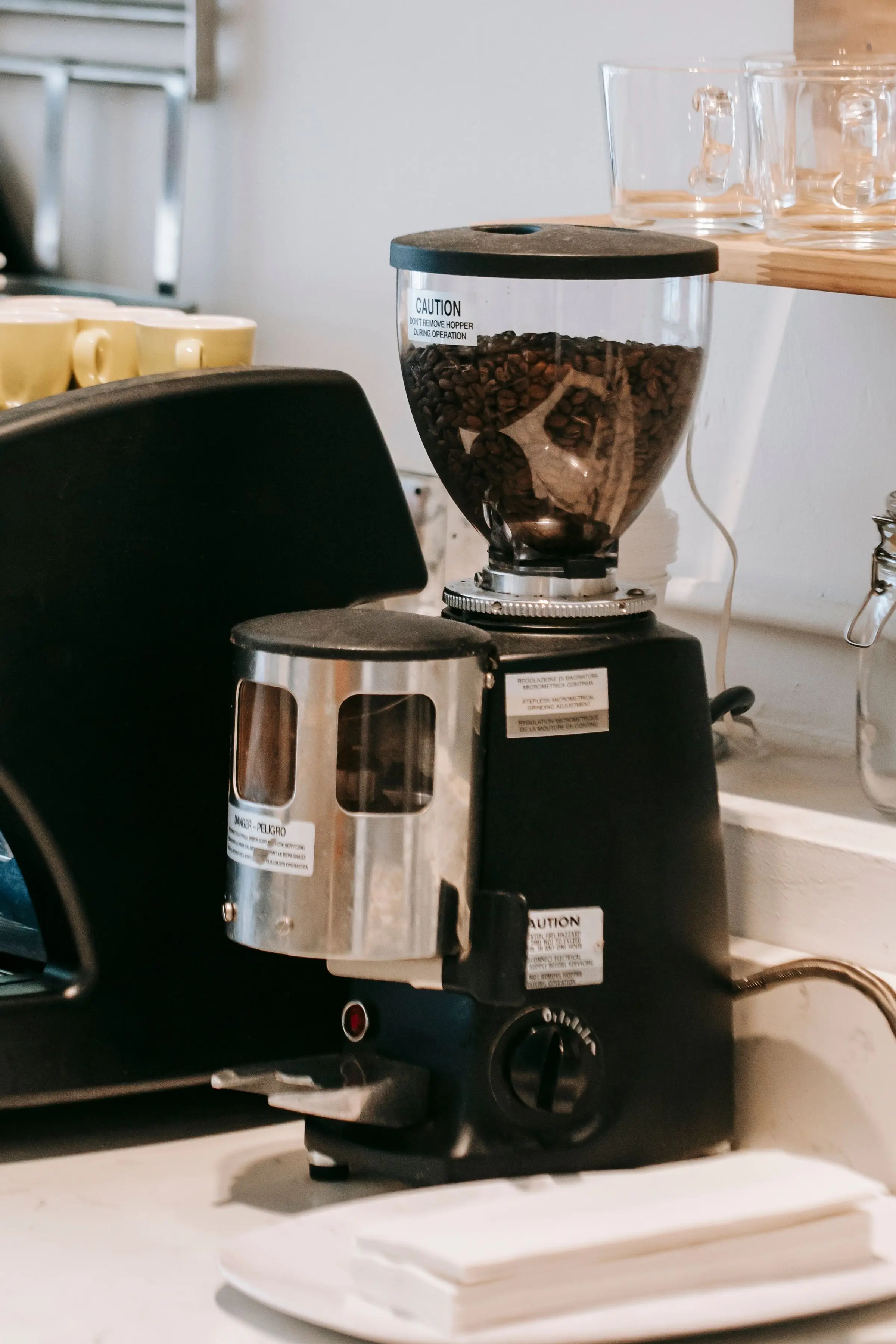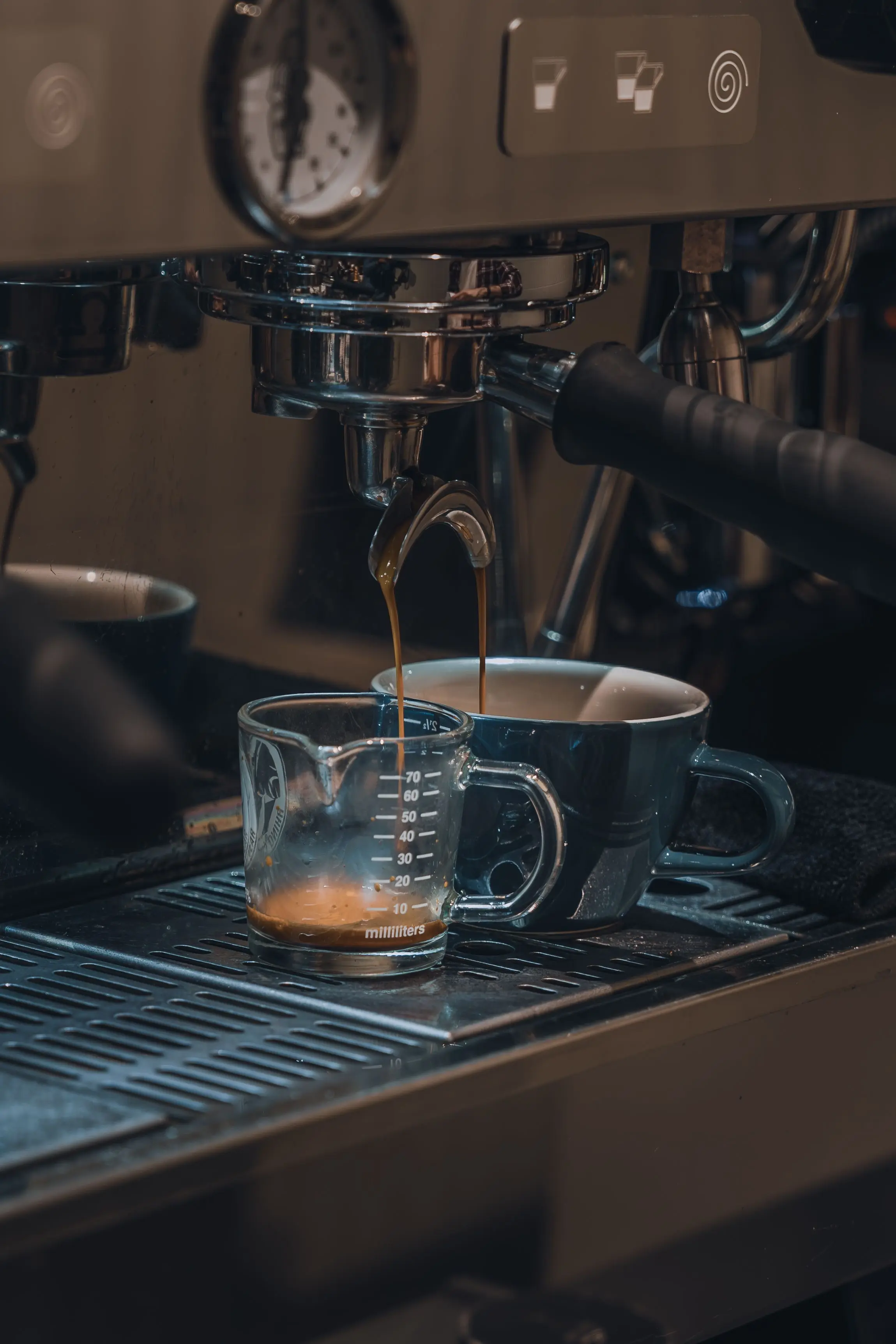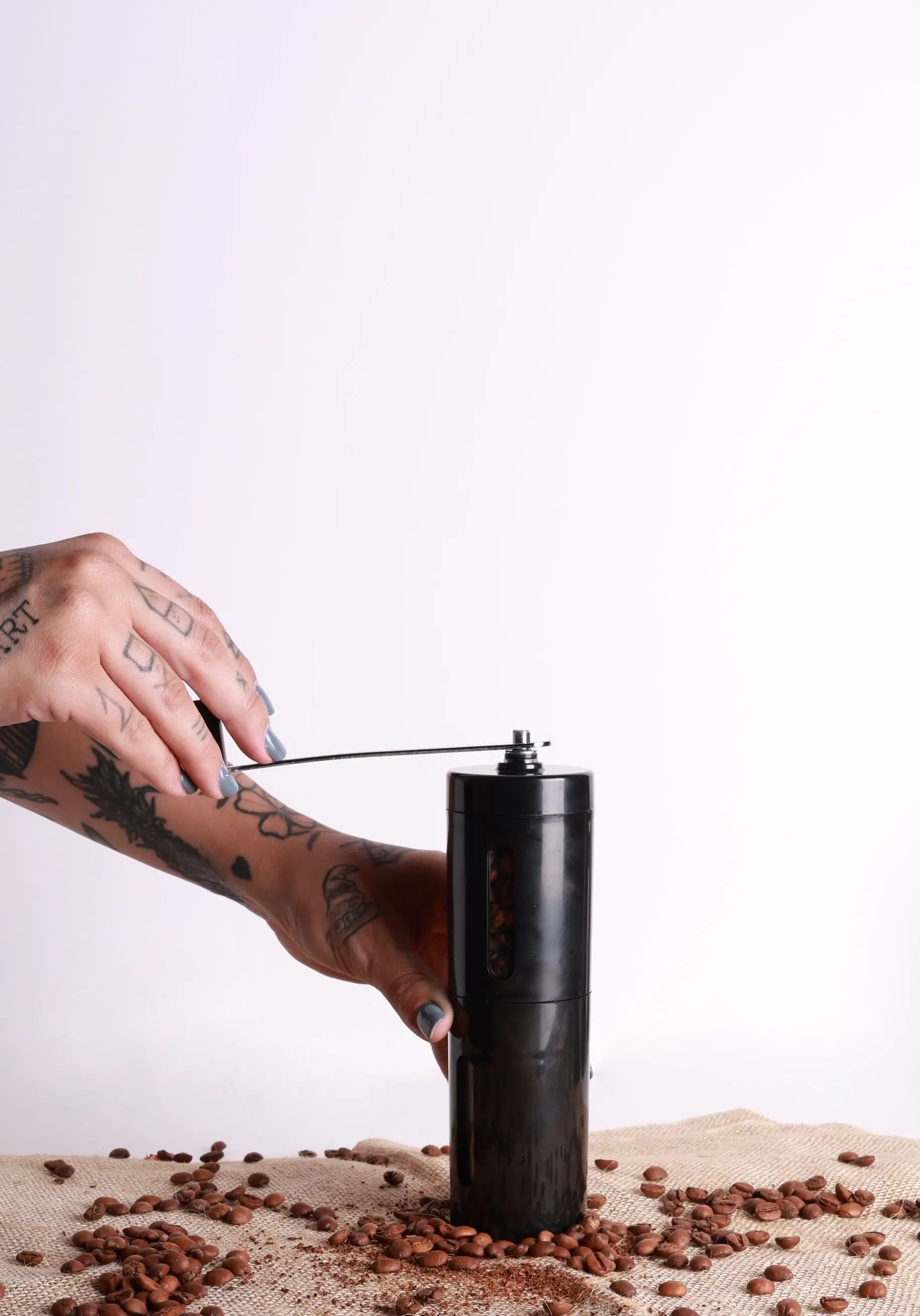
If you are making espresso, the makers are not neutral on this. Gaggia’s manual for the Classic tells its own owners to use a burr grinder and says why, in one sentence, on page 13.
One maker, both kinds, three price points
De’Longhi sells blade and burr grinders side by side in the same KG range, which makes the gap easy to read. These are the three on De’Longhi’s UK grinder page.
| Model | Type | Grind control | UK price |
|---|---|---|---|
| KG200 | blade grinder | push to grind button | £42.99 |
| KG210 | blade grinder | 3 grind settings | £56.99 |
| KG79 | burr grinder | 16 grind settings | £66.99 |
About twenty-four pounds separates the cheapest blade grinder from the burr model. The difference you are paying for is in the middle column. On the KG200 the only control is how long you hold the button down. On the KG79 you choose one of sixteen settings and the grinder holds it.
What Gaggia tells Classic owners
The Gaggia Classic E24 manual puts it plainly in its coffee advice section: “It is preferable to use a grinder mill rather than a blade mill because the latter releases too much coffee powder and produces an irregularly ground blend.”
Two complaints there, and they are separate. Too much powder, and a blend that is not evenly ground. The same manual also says pump espresso machines “require a finely ground blend”, and that grinding just before use would be ideal.
Why an uneven grind shows up in espresso and not in a cafetiere
Sage’s Barista Pro manual explains what grind size is doing. Too fine, and “the water will not flow through the coffee, even when under pressure”, which Sage says gives a dark, bitter, over extracted shot. Too coarse, and “the water will flow through the ground coffee in the filter basket too quickly”, which gives a pale, under extracted one.
Espresso puts water through the bed at 15 bar on the Barista Pro and the Gaggia Classic, and 19 bar on the De’Longhi Rivelia. Water takes the easiest route through a bed that contains both powder and coarse pieces. A cafetiere gives the coffee four minutes in loose water, and is far more forgiving of the same grind.
That is the practical rule. The finer and the more pressurised the brew, the more an uneven grind costs you.
What the settings count is for
Sixteen settings on the KG79 does not mean sixteen good espresso grinds. It means sixteen fixed stops you can return to, which is what lets you change one thing at a time when a shot runs too fast or too slow.
The grinders built into the machines we list show the same ladder.
| Machine | Burr type | Grind settings published |
|---|---|---|
| Philips Series 3300 LatteGo | ceramic | 12 |
| Sage the Barista Express | steel conical | 16 |
| Ninja Luxe Café Premier | conical | 25 |
| Sage the Barista Pro | steel conical | 30 |
| Sage the Barista Touch | steel conical | 30 |
| De’Longhi Magnifica Evo | not published | not published |
Check which way a scale runs before you turn anything. Ninja’s manual states that on the Luxe Café 25 is the coarsest setting and 1 the finest.
If you are buying a separate grinder
Sage’s Smart Grinder Pro is the obvious step up from a kitchen blade grinder: “With 60 unique settings, this programmable conical burr grinder maximizes the potential of any brew.” It lists at £189.95, reduced from £209.95, and measures 21.5 x 16 x 38.9 cm, so it needs its own patch of counter beside the machine.
Baratza’s UK range starts at £139.95 for the Encore and £159.95 for the Encore ESP, and the company builds nothing but burr grinders. Its own summary of the case is short: “Every delicious espresso, cold brew, or pour over is thanks to a good burr coffee grinder.”
Where a blade grinder is still the right buy
If the coffee goes into a cafetiere or a filter machine, the four-minute brew absorbs a lot of what Gaggia is complaining about, and £42.99 buys a grinder that turns beans into something you can brew today.
If the coffee goes into a portafilter, a blade grinder will cost you more in wasted beans than the £24 you saved. Either buy a burr grinder or buy a machine with one fitted, such as the Barista Express at £499.95 or the Ninja Luxe Café at £499, and skip the separate box entirely.