Four UK manuals give the same eleven steps in the same order, with different button names and different figures. Where your own manual differs from this page, your manual wins.
1. Fill the tank with cold water
Sage’s Barista Express manual says to “Fill the water tank with cold, preferably filtered water up to the MAX mark”. Gaggia’s Classic E24 manual says the same in its own words: remove the tank cover and fill with cold water to the MAX level. De’Longhi’s Dedica manual asks for fresh clean water, not past MAX.
Tank sizes set how often: 1.1 L on the Dedica Style EC685.M, 1.9 on the Bambino Plus, 2 on the Barista Express, 2.1 on the Gaggia Classic E24.
2. Rinse the circuit before the first coffee
All four manuals run water through an empty machine before any coffee goes near it. Gaggia is the most direct: “Warning! Do not activate the brew button without loading the circuit first.”
Sage’s first use routine runs hot water through the group head, then steam through the wand for ten seconds, then hot water through the outlet, and “Repeat steps 1-3 until the water tank is empty”. De’Longhi’s Dedica manual says that “When used for the first time, the internal circuits of the appliance must be rinsed as follows”, dispensing into a half-litre container five times.
3. Heat up with the portafilter in place
Gaggia is explicit: “To brew the first coffee, it is necessary to preheat the filter holder first.” Lock the empty portafilter in, brew about 150 cc into a large cup, then wait a few minutes.
De’Longhi’s version is a tip for hotter coffee: “Before making the coffee, warm the cups by rinsing them with a little hot water.” The Barista Pro and Bambino Plus reach extraction temperature in 3 seconds; the Gaggia Classic publishes no figure.
4. Choose the basket
Sage ships two kinds and the choice changes the coffee. The Barista Express manual: “Use Single Wall filter baskets if grinding fresh whole coffee beans” and “Use Dual Wall filter baskets if using pre-ground coffee”.
The Barista Pro manual explains the second one. Dual wall baskets “regulate the pressure and help to optimise the extraction regardless of the grind, dose and tamp pressure or freshness”, which makes them the safe choice for supermarket ground coffee.
5. Dose the basket
Sage publishes the weights its 54 mm baskets are built for: “1 CUP basket = approx. 8–11g” and “2 CUP basket = approx. 16–19g”. De’Longhi’s instruction is about the grind instead: “Fill the filter with ground coffee (fig. 7). Make sure to use finely ground coffee specifically for espresso.”
6. Tamp
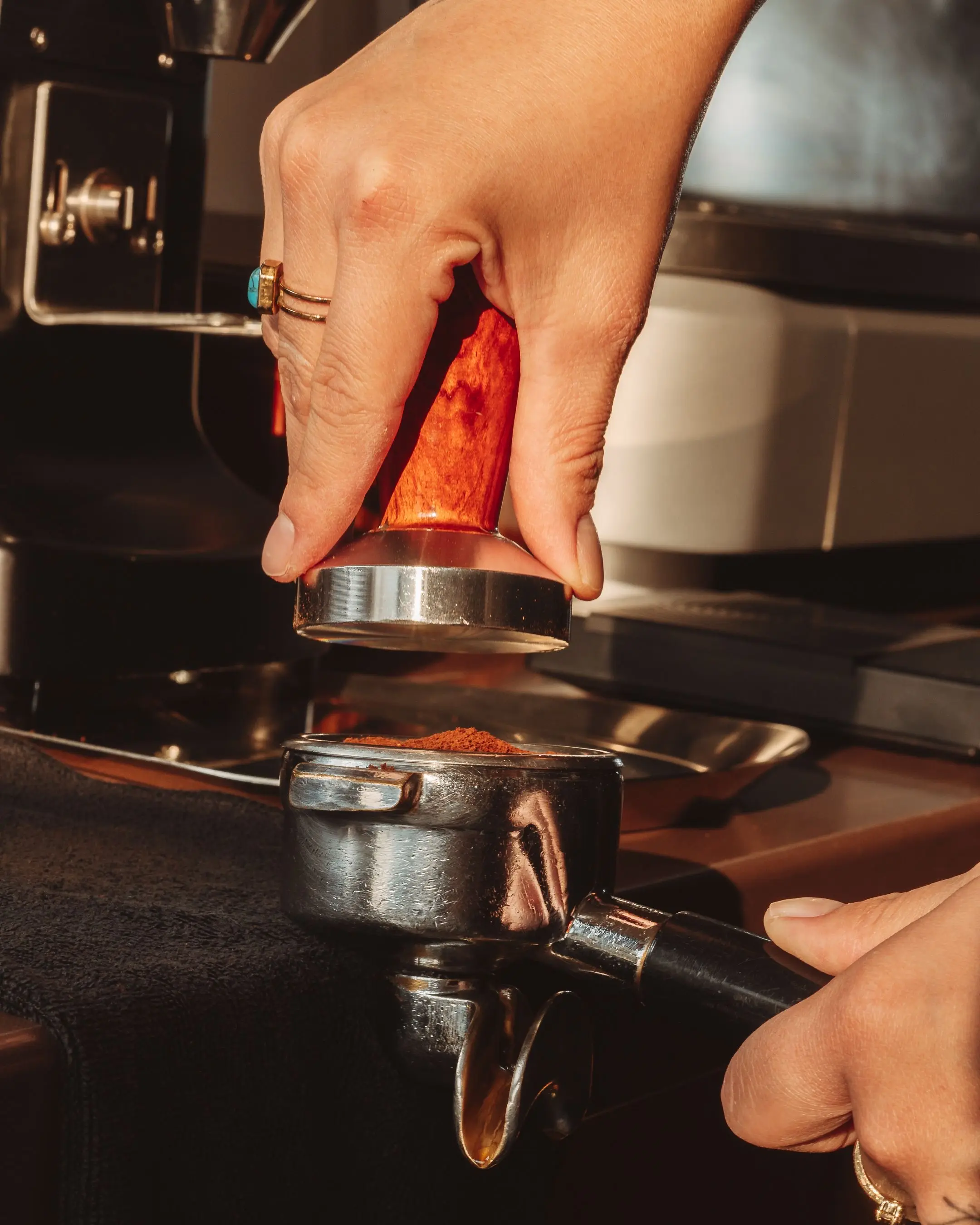
Sage: “Once grinding is complete, tamp down firmly”, and it gives a depth check rather than a force. “the top edge of the metal cap on the tamper should be level with the top of the filter basket AFTER the coffee has been tamped”.
Gaggia asks for evenness: “The coffee must be pressed evenly to obtain a well levelled and flat surface.” De’Longhi covers both errors: “If you press too firmly, the coffee will be delivered slowly and will be strong”, and too lightly gives a fast, weak shot.
7. Wipe the rim
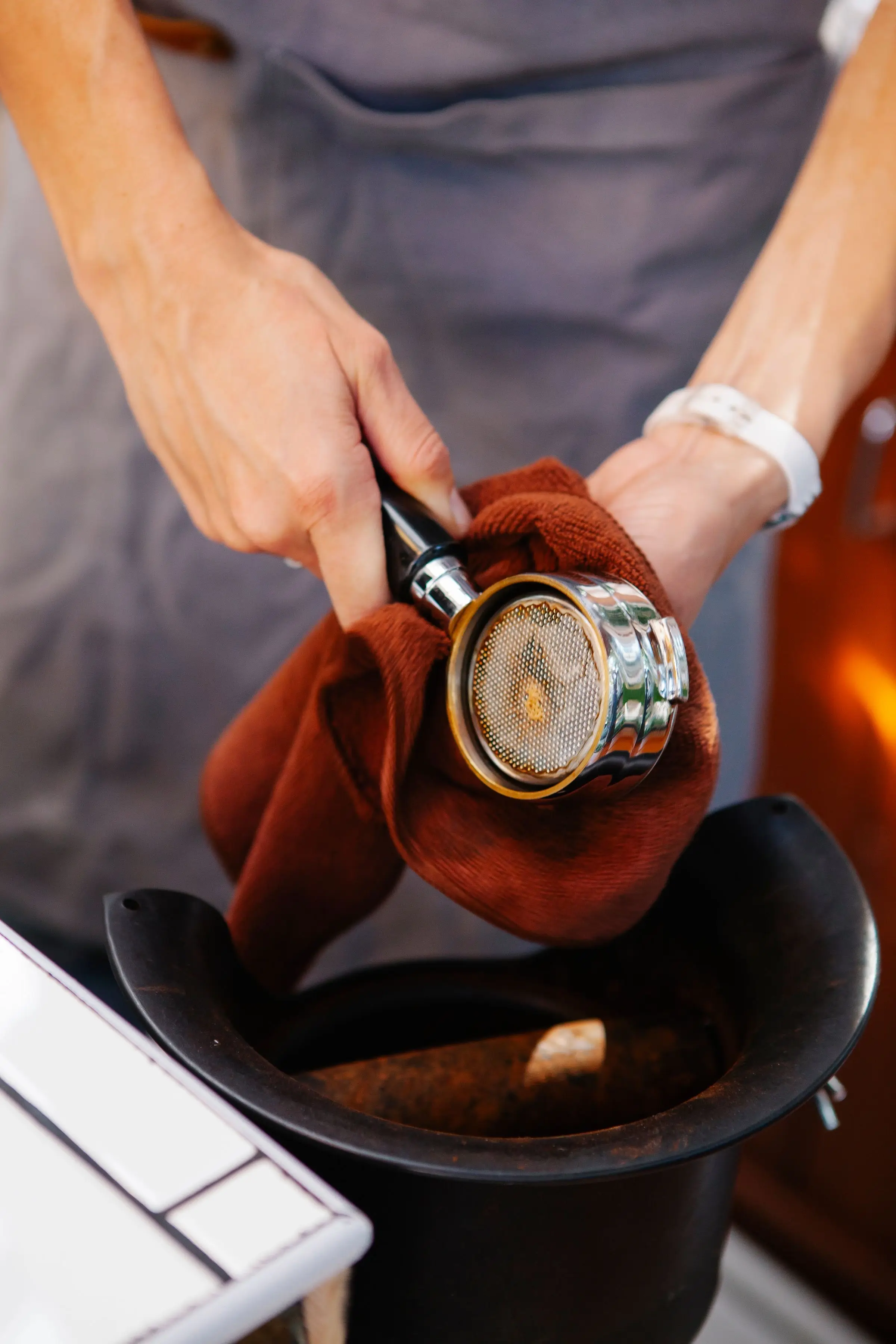
De’Longhi: “Remove any excess coffee from the rim of the filter holder and attach it to the appliance (fig. 9).” Gaggia: “Remove any coffee residues from the edge of the filter holder (Fig.1-17).”
8. Purge the group head
Sage puts this step immediately before locking in: “Before placing the portafilter into the group head, run a short flow of water through the group head by pressing the 1 CUP button.”
9. Lock in and pull the shot
Sage: insert the portafilter and rotate the handle towards the centre until resistance is felt. Gaggia is more specific, asking for a 45 degree movement to the left, then a turn to the right to lock, with the handle perpendicular to the machine or slightly right of it.
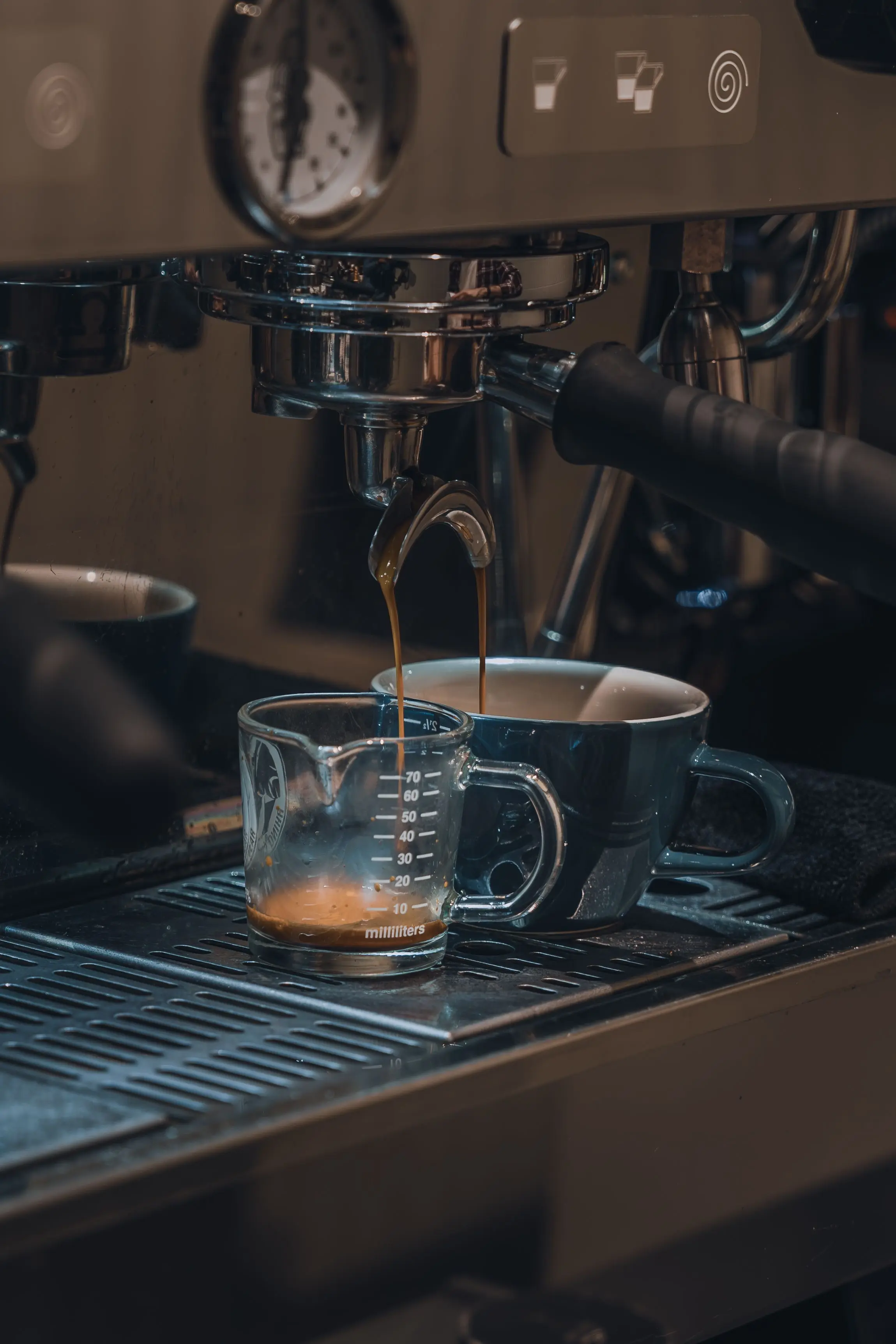
The Barista Express has a preset: “Press the 2 CUP button once to extract a double shot of espresso at the preset volume (approx. 60ml).” The Dedica stops itself too. Gaggia’s Classic has no volume control, so the manual tells you to watch the cup: “When the cups are 3/4 full, press the brew button again.”
10. Steam the milk
Start cold. De’Longhi: “For dense and consistent froth, skim or semi-skimmed refrigerated milk (about 5° C) should be used.”
Purge the wand first. Sage’s Bambino Plus manual says that “Prior to texturing milk, it is recommended to momentarily purge the steam wand.”
Then the position, which every manual describes the same way. Sage: “insert the steam wand tip (1–2cm) below the surface of the milk, close to the right hand side of the jug at the 3 o’clock position”. Gaggia: “Place the steam nozzle just below the surface of the milk; if it has been inserted too deep, the milk will not be frothed.”
Stop at the right temperature. Sage recommends milk “between 60-65°C”. Gaggia adds a limit of its own: “The dispensing operation should last no longer than 60 seconds”, because steaming for longer can empty the boiler.
11. Purge and wipe the wand again
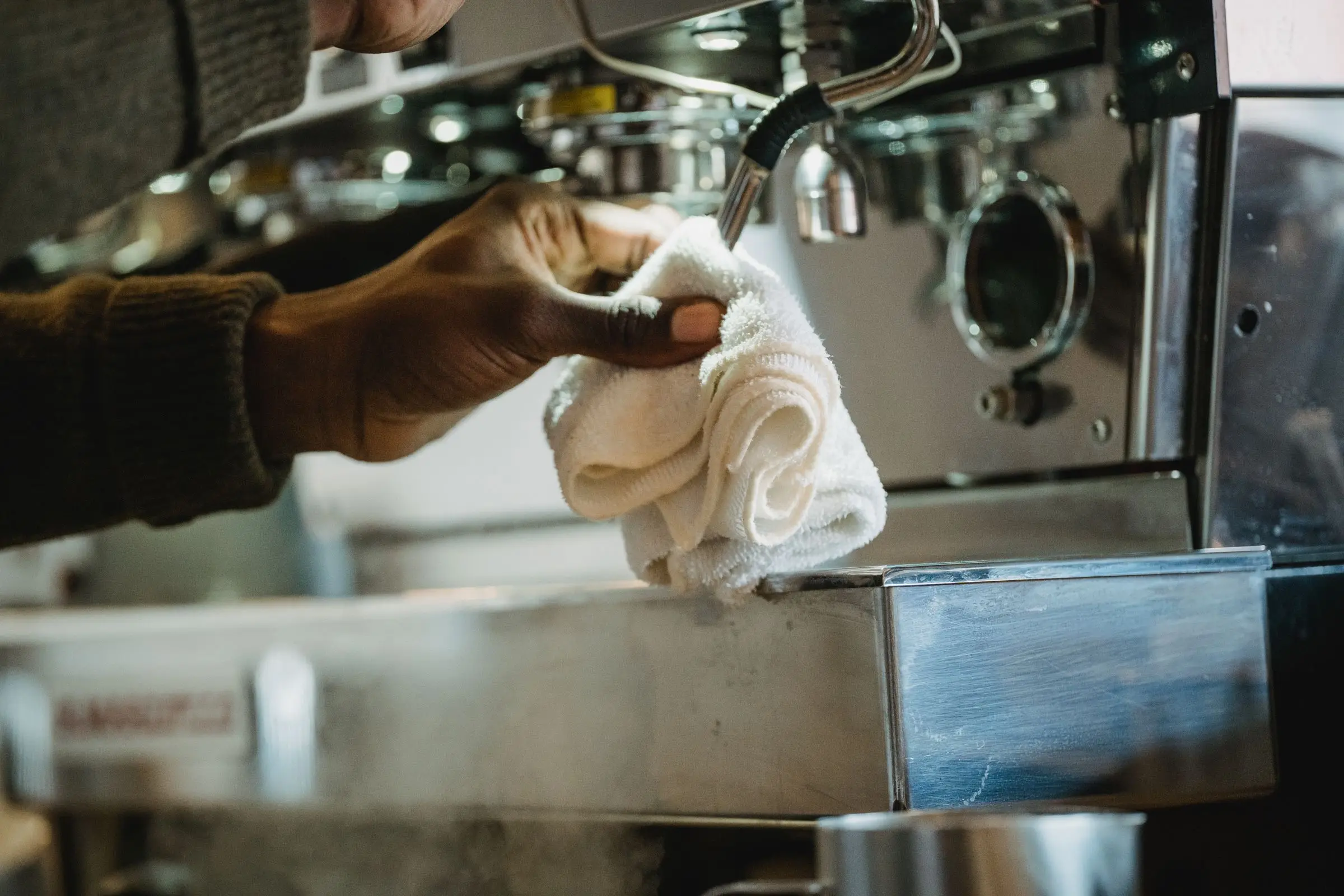
Sage: “The steam wand should always be cleaned after texturing milk.” Wipe it with a damp cloth, then blast steam over the drip tray to clear the milk inside.
Where the machines differ
| Machine | Coffee into the basket | Tamp | Milk |
|---|---|---|---|
| Dedica Style EC685.M | you add pre-ground | supplied tamper | manual frother |
| Gaggia Classic E24 | you add ground coffee | dedicated tamper | manual wand |
| Bambino Plus | you add ground coffee | 54 mm tamper | automatic wand, jug on a sensor |
| Barista Express | grinds in, 16 settings | 54 mm, integrated | manual wand |
| Barista Pro | grinds in, 30 settings | 54 mm, integrated | manual wand |
| Barista Touch | grinds in, 30 settings | 54 mm, integrated | automatic wand, 40 to 75 °C |
| Ninja Luxe Café Premier | grinds in, 25 settings | Assisted Tamper | automatic, four presets |
The automatic machines change step 10 rather than remove it. On the Bambino Plus the jug still has to sit on the drip tray sensor and the milk still has to cover the wand tip. And no machine here lets you skip the wipe and purge at the end.